

William Shakespeare and Anne Hathaway had three children: Susanna, followed by twins Hamnet and Judith. Did Shakespeare have children who carried his family into another generation? Yes: both daughters became mothers, although no direct line survives today.
| Child | Baptized | Children of their own |
|---|---|---|
| Susanna Shakespeare | May 26, 1583 | One daughter, Elizabeth Hall |
| Hamnet Shakespeare | February 2, 1585 | None; he died aged 11 |
| Judith Shakespeare | February 2, 1585 | Three sons: Shakespeare, Richard, and Thomas Quiney |
Marriage and Family Life in Stratford
Shakespeare married Anne Hathaway in 1582, when he was 18 and she was 26. Anne was already pregnant with their first child. Their marriage lasted about 33 years, ending with William’s death in 1616.
Stratford remained the family’s home while Shakespeare’s theatrical career took him to London. In 1597, he bought New Place, one of Stratford’s largest houses, though the purchase does not establish how often he returned from London.
What the Baptism Records Tell Us
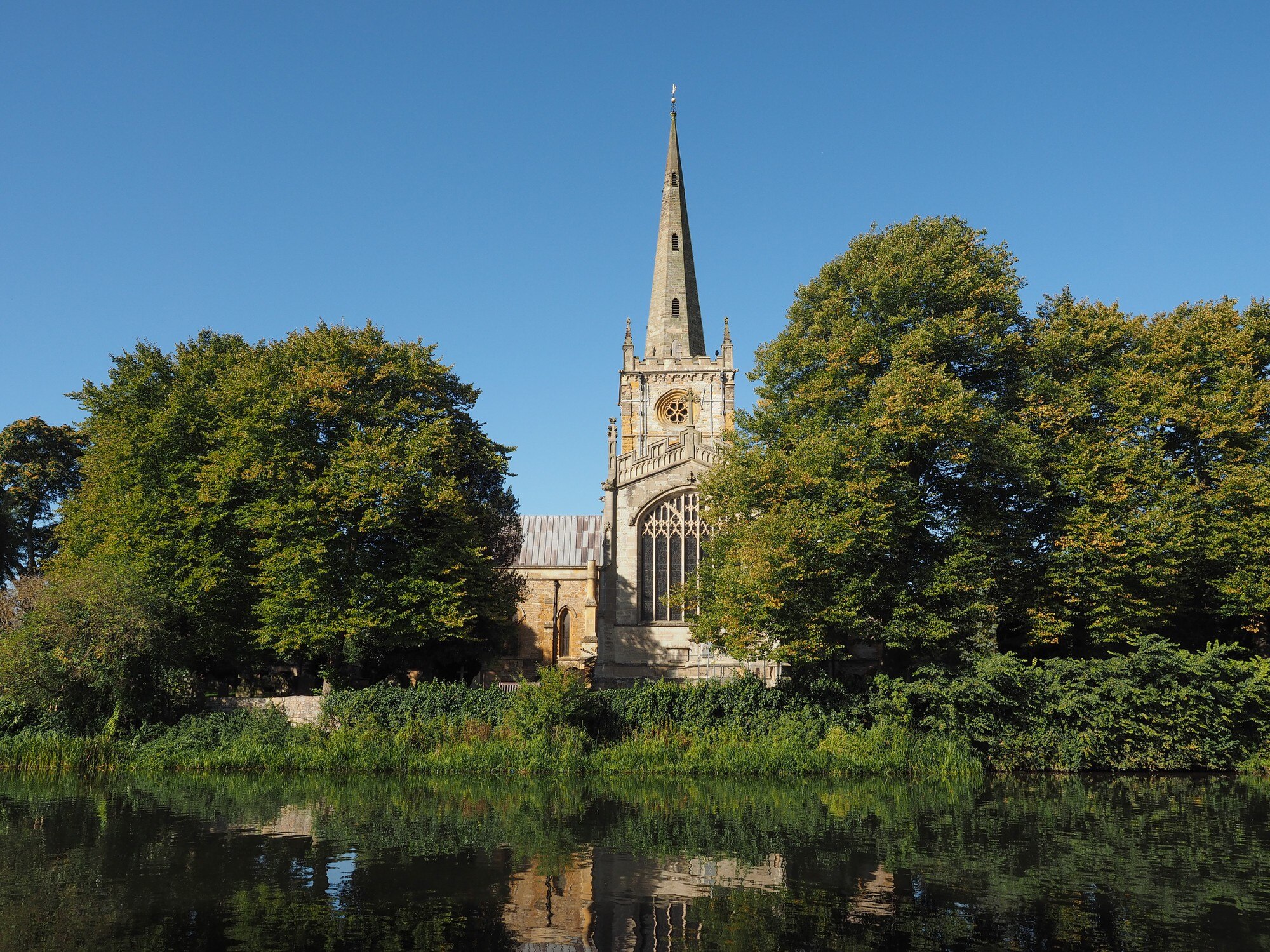
All three children’s baptisms appear in the parish records of Holy Trinity Church, Stratford-upon-Avon. Susanna was baptized on May 26, 1583. The twins, Hamnet and Judith, were baptized on February 2, 1585.
Those entries place all three Shakespeare children in the same parish where their father would later be buried. They also show how quickly the household grew: the couple had a daughter and twins within the early years of their marriage.
The recorded dates are baptisms, not exact birthdays.
Susanna’s Marriage and Daughter
Susanna Shakespeare, the eldest child, married physician John Hall on June 5, 1607. Their daughter, Elizabeth Hall, was baptized on February 21, 1608. She was the only grandchild born during Shakespeare’s lifetime.
John Hall’s surviving medical case notes offer a view of his professional world, though they are not a household diary. Susanna comes into sharper personal focus through a dispute that reached a church court.
In 1613, she brought a defamation case against John Lane after he accused her of sexual misconduct. Susanna won the case; Lane was excommunicated after failing to appear. The physician’s wife had taken her accuser to court and secured a judgment in her favor.
Susanna outlived both her father and her husband, dying in 1649. Through Elizabeth, her branch of the family continued into the next generation.
Hamnet’s Short Life
Hamnet was Shakespeare’s only son. His burial was recorded at Holy Trinity Church on August 11, 1596, when he was 11 years old. The cause of his death is unknown.
His death left Judith without her twin. Shakespeare’s purchase of New Place came the following year: the family’s move into a larger Stratford property followed a permanent loss.
That loss has long drawn readers toward Hamlet, written around 1600. Hamnet and Hamlet could be interchangeable forms of a name in Shakespeare’s time, while the tragedy itself drew on an existing story about a Danish prince. The connection is compelling without being a proven account of the play’s origins: a father who had lost his son later wrote a tragedy preoccupied with bereavement.
Judith’s Marriage and Sons
Judith married Thomas Quiney, a Stratford vintner, on February 10, 1616, shortly before her father’s death. The marriage was soon overshadowed by a church-court scandal.
The records show that Quiney had fathered a child with Margaret Wheeler, who died along with her baby. Judith’s marriage thus began amid a public reckoning over her husband’s conduct.
Judith and Thomas went on to have three sons: Shakespeare, Richard, and Thomas Quiney. Their first son died in infancy. Richard and Thomas died as young adults in 1639, and neither left known children.
Judith survived them all, living until 1662. The twin who had lost her brother in childhood also outlived every one of her own sons. Her life extended decades beyond her father’s theatrical career, but her branch of his family ended without another generation.
Where the Direct Family Line Ended
Elizabeth Hall, Susanna’s daughter, married Thomas Nash in 1626. After his death, she married John Barnard in 1649. Neither marriage produced children.
With Judith’s sons gone, Elizabeth was the last surviving grandchild. Shakespeare’s family had reached a point at which the continuation of his direct line depended on her having a child.
She had none. When Elizabeth died in 1670, Shakespeare’s documented direct family line ended.
Key Takeaways
- The family began with three children, including a pair of twins.
- Susanna’s daughter was the only grandchild born while Shakespeare was alive.
- Hamnet died in childhood; both daughters lived well into adulthood.
- The children’s parish entries give baptism dates, not exact birth dates.
- Neither daughter’s branch produced a surviving direct line.
Frequently Asked Questions
Did Shakespeare have any illegitimate children?
No children outside Shakespeare’s marriage have been established by reliable evidence. A later story identifies him as the father of poet William Davenant, but it does not prove paternity.
Who inherited most of Shakespeare’s money?
Susanna was the principal beneficiary of Shakespeare’s will, receiving the bulk of his estate, including New Place. Judith and other beneficiaries also received bequests; the inheritance included property, not simply cash.
Was Shakespeare married?
Yes. Anne Hathaway was his only documented spouse; uncertainty concerns their private relationship, not whether they married.
Are the children’s exact birth dates known?
No, exact birth dates are not securely documented for any of the three children. Infants were commonly baptized soon after birth, but the interval varied, so the parish dates cannot supply precise birthdays.
Does Shakespeare have any living direct descendants?
There are no known living direct descendants of Shakespeare. People may be related to him through other family branches, but a shared surname alone does not establish a family connection.
Three Children, One Documented Family
Shakespeare was a father whose children had lives extending far beyond his work. Susanna’s successful action against John Lane shows one daughter taking a public stand for her reputation. Judith’s story covers a longer span of family loss, while Hamnet’s death remains an important context for readers drawn to the grief in Hamlet.