

How did Shakespeare die? His cause of death is unknown; the familiar account says he fell ill with a fever after drinking with fellow writers in Stratford, but it was written decades later. William Shakespeare died on April 23, 1616, and was buried two days afterward.
His last spring comes into focus through a will signed in March, a church register and a later anecdote about a drinking party. These sources differ in what they establish: the will records his arrangements, the register documents his burial, and the anecdote offers an unverified explanation of his death.
What the Records Say About His Last Days
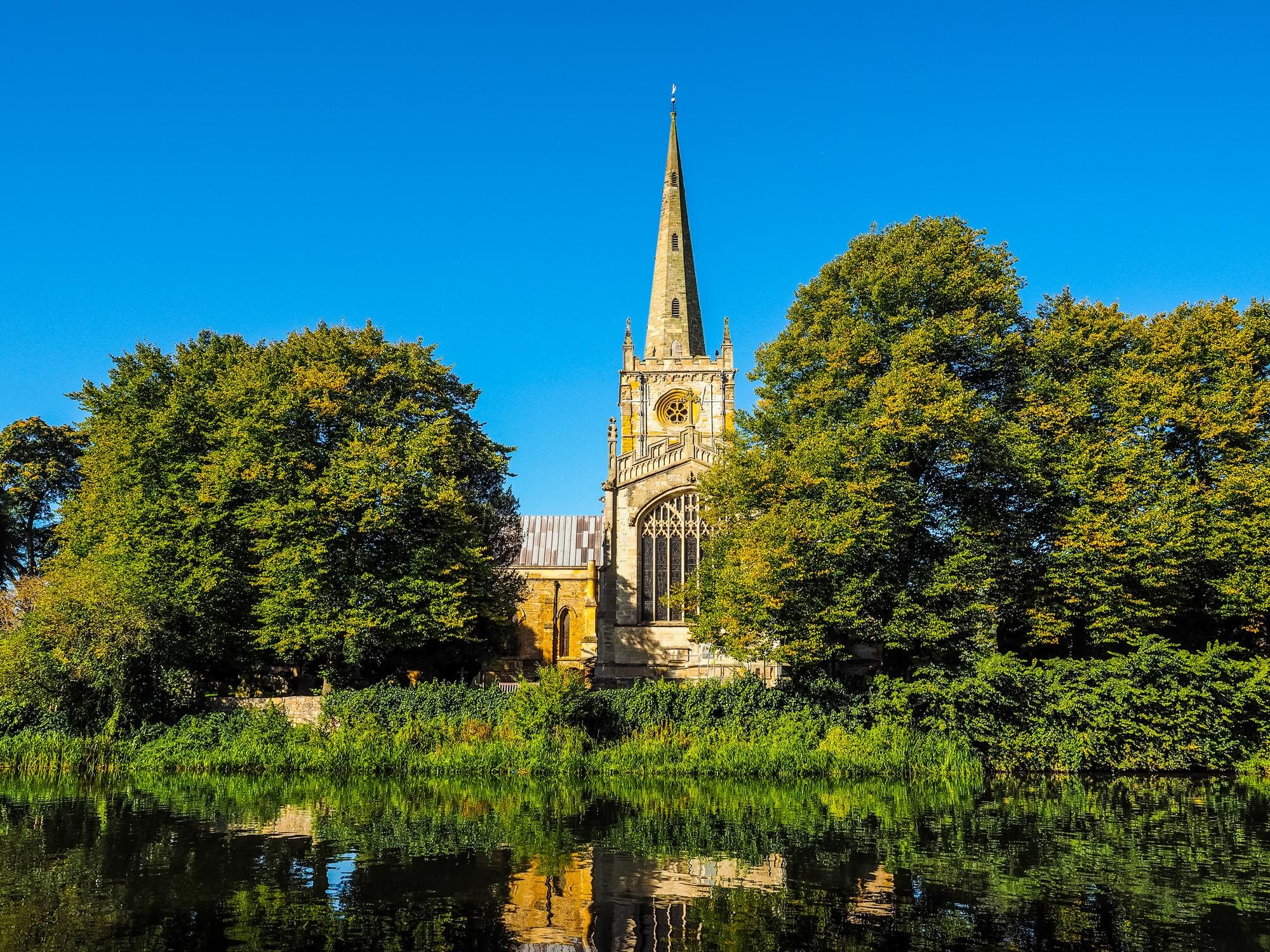
Shakespeare’s funerary monument gives April 23, 1616, as his death date. The parish register records his burial on April 25 at Holy Trinity Church in Stratford-upon-Avon. Robert Bearman’s account of the burial entry in the Folger Shakespeare Library’s Shakespeare Documented distinguishes these sources: the monument supplies the death date; the register records the burial.
The register places his burial among the parish’s handwritten entries. The monument makes a more public statement, preserving his death date in a Latin inscription. One belongs to the church’s daily recordkeeping; the other commemorates a celebrated parishioner. Together they fix the end of his life, though neither tells us when he first took to his bed.
Why His Birthday Is Uncertain
The conventional April 23 birthday is estimated by counting back three days from his recorded baptism on April 26, 1564. His birth date is unrecorded. Baptism commonly followed birth, but that interval does not establish his birthday.
He was about 52 when he died. The claim that he died on his 52nd birthday gives his life a memorable symmetry; the baptism entry leaves the exact coincidence unresolved.
Where the Drinking Story Comes From
A familiar anecdote about Shakespeare’s death brings together three writers: Shakespeare, Ben Jonson and Michael Drayton. John Ward describes a “merry meeting” at which, he qualifies, “it seems” they “drank too hard.” In Ward’s telling, Shakespeare died of a fever contracted there.
Ward names Shakespeare’s supposed companions but supplies no conversation or drinking place. Those details remain unknown.
Ward was a later vicar of Holy Trinity Church. The Folger Shakespeare Library’s Shakespeare Documented dates his notebook to 1662–1663, roughly 47 years after Shakespeare’s death, and describes its contents as including miscellaneous gossip. The route by which this story reached him is unknown. His note preserves an unverified anecdote recorded decades after the supposed gathering.
Could Fever or Typhus Explain His Death?
In the Shakespeare Birthplace Trust’s podcast “How Did Shakespeare Die?”, Elizabeth Dollimore discusses typhus fever as a possible cause while emphasizing that nobody knows what killed him. Shakespeare’s surviving records provide no evidence for that diagnosis.
Ward named only a fever, not typhus. His account gives neither its duration nor a description of how Shakespeare’s condition changed. Without those particulars, the anecdote cannot distinguish one illness from another.
Ward’s explanation connects drinking with the fever, but even if the gathering occurred, it would not establish what caused the illness.
What His Will Can Tell Us
The National Archives dates Shakespeare’s will to March 25, 1616, roughly four weeks before his death. It describes him as being in “perfect health and memory.” The Shakespeare Birthplace Trust identifies this as typical wording, so it does not settle whether illness had already begun.
The will brings us closer to his practical concerns. His signature appears on each of its three pages. Among its provisions is the bequest to Anne Hathaway, his wife, of his “second best bed.” The University of Victoria’s Early Modern England Encyclopedia gives the clause in modernized spelling: “I give unto my wife my second best bed with the furniture.”
The document records decisions about property and inheritance near the end of his life. Making those decisions does not, by itself, show that he expected to die within weeks.
What His Grave Adds to the Evidence
Shakespeare’s grave lies in the chancel of Holy Trinity Church, near his funerary monument. Its inscription addresses anyone who might disturb the burial. In modernized spelling, it reads:
Good friend, for Jesus’ sake forbear, To dig the dust enclosed here. Blessed be the man that spares these stones, And cursed be he that moves my bones.
The verse changes tone halfway through: a request becomes a blessing, then a curse. The inscription demands that his remains be left undisturbed. It offers no clues about his final illness.
Key Takeaways
- The dates are firmer than any account of the final illness.
- The birthday coincidence rests on tradition, not a recorded birth date.
- Ward records the drinking-and-fever story decades later; its source is unknown.
- The will concerns inheritance; the grave verse concerns the protection of his remains.
Frequently Asked Questions
What Was Unusual About Shakespeare’s Death?
Nothing in the surviving records establishes that his death itself was unusual. Ward’s drinking-and-fever story was recorded decades later and does not establish unusual circumstances.
What Shakespeare’s Final Records Establish
The monument and parish register establish Shakespeare’s death and burial dates. The will records his arrangements shortly before his death, but does not establish his health. Ward’s much later anecdote is the source of the unverified drinking-and-fever story. These sources answer different questions; none identifies what killed Shakespeare.