
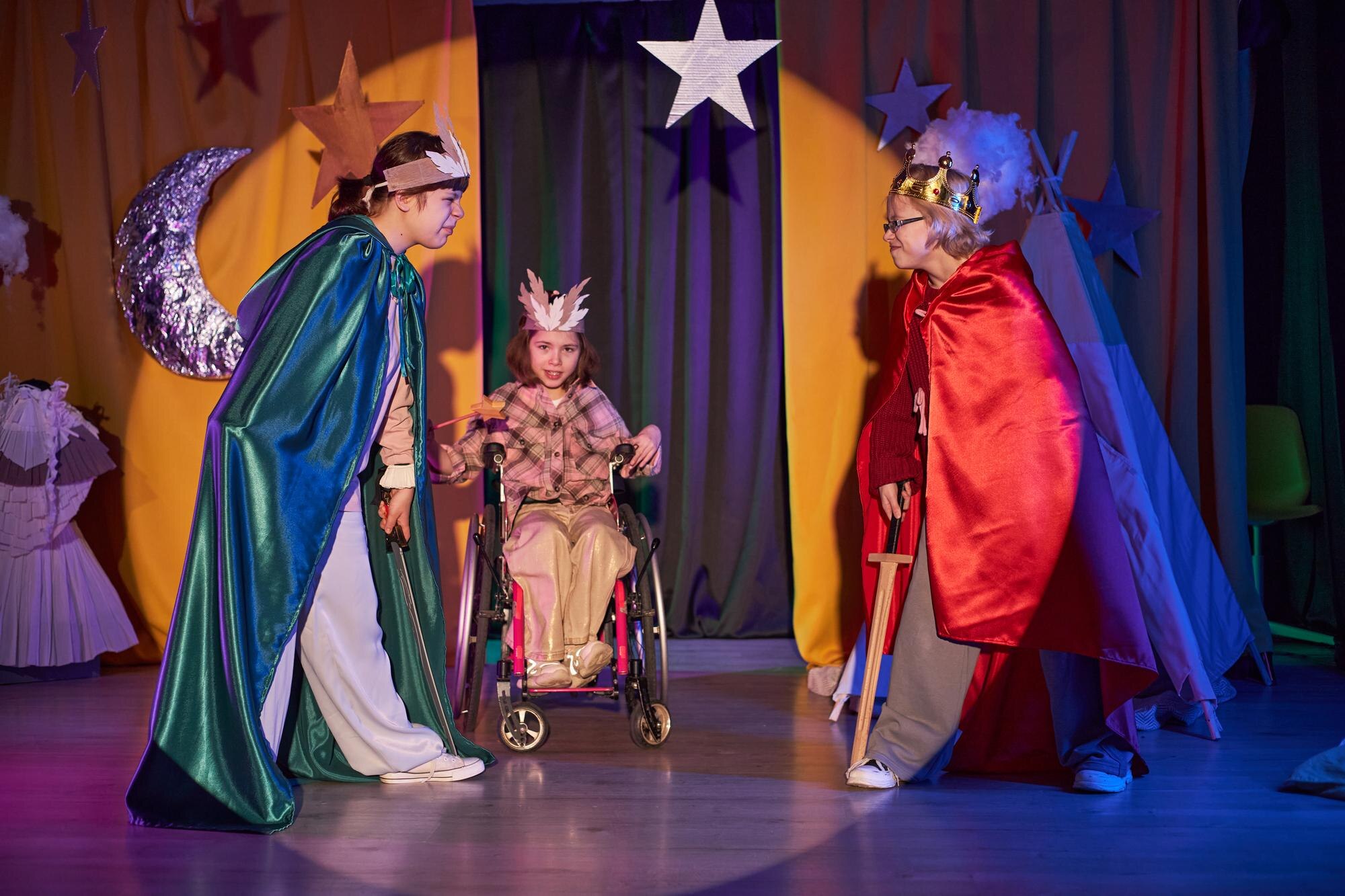

The seven common types of conflict in literature are person versus person, self, society, nature, technology, the supernatural, and fate. Each names a force blocking what a character wants: an opponent closes in, guilt makes action unbearable, or survival depends on a failing machine. Literary conflict is that struggle between a goal and resistance, not simply an unpleasant event.
The examples below follow those collisions into specific moments. Person versus self describes internal conflict; the other categories locate opposition outside the character, though a story can bring several together.
| Type | Opposing force | Internal or external? | Example |
|---|---|---|---|
| Person versus person | Another character | External | “The Final Problem” |
| Person versus self | Conflicting desires or convictions | Internal | Crime and Punishment |
| Person versus society | Institutions or social rules | External | 1984 |
| Person versus nature | Natural forces or living things | External | The Old Man and the Sea |
| Person versus technology | Machines or technological systems | External | “The Machine Stops” |
| Person versus the supernatural | Forces beyond natural laws | External | Beloved |
| Person versus fate | An apparently predetermined outcome | External | Oedipus Rex |
1. Person Versus Person
Holmes wants to expose a criminal organization. Moriarty wants to stop him. In Arthur Conan Doyle’s “The Final Problem,” those incompatible aims turn an investigation into a threat to the detective’s life.
Person-versus-person conflict requires this active interference: one character’s decisions obstruct another’s goal. Violence is optional. An inheritance dispute can create the same structure if each person’s success costs the other something important.
Holmes and Professor Moriarty carry their struggle to Reichenbach Falls. Watson is drawn away by a false message about a sick woman; when he returns, Holmes is gone. Footprints and signs of a struggle point toward the precipice, turning their intellectual contest into an apparently fatal physical encounter.
2. Person Versus Self
An outward victory cannot settle a struggle happening within the person who wins it. Person-versus-self conflict begins when a character’s desires or convictions pull against one another, making even a freely available choice difficult.
In Fyodor Dostoevsky’s Crime and Punishment, Raskolnikov’s theory that exceptional people may transgress ordinary moral rules collides with his response to his own murders. He wants to sustain the justification, yet guilt and psychological distress keep undermining it. His mind will not obey his argument.
The police investigation adds an external threat, but that threat cannot explain his torment in private. Raskolnikov repeatedly withdraws to his cramped room, where isolation gives him no relief. The important opposition needs no investigator present: pacing alone with his guilt, he remains both the defender of his theory and the person suffering under it.
3. Person Versus Society
In George Orwell’s 1984, the telescreen makes collective power intimate. It brings the Party’s voice into Winston Smith’s room while allowing him to be watched. Even at home, he cannot assume that his movements are private.
Winston wants private thought and a life beyond Party control. The Party’s surveillance and manipulation of truth turn those desires into dangers. Its reach extends beyond an official issuing orders: it shapes what people can safely say and what records will count as evidence.
That organized reach defines person-versus-society conflict. A government can supply it, as here, but enforced community customs or a class system can also block a character’s goal. Winston’s diary makes the stakes concrete. Writing down a thought becomes resistance because the surrounding order claims authority over thought itself.
4. Person Versus Nature
Nature does not need to hate a character to defeat him. In Ernest Hemingway’s The Old Man and the Sea, Santiago’s goal is straightforward: catch a marlin and bring it home. The fish’s strength and his isolation at sea make that goal punishingly difficult.
The fishing line cuts his hands. Exhaustion accumulates as he holds on. Santiago respects the marlin, but respect does not loosen the line or end the contest; their physical needs remain opposed.
Catching the fish changes the struggle instead of ending it. Santiago lashes the marlin alongside his skiff, where sharks attack it during the journey home. He fights to preserve what he has won, yet the catch is reduced to its skeleton. Person-versus-nature conflict turns success into another exposure to loss.
5. Person Versus Technology
A machine or technological system becomes an opposing force when its operation or failure blocks a character’s goal. In E. M. Forster’s “The Machine Stops,” technological dependence makes that opposition almost impossible to escape.
People live in isolated underground rooms, relying on the Machine for their needs and communication. Kuno wants direct experience beyond that mediated existence. His wish already puts him at odds with a system that makes ordinary life possible while restricting what living means.
Then the Machine deteriorates. Complaints about defects become part of daily life, but the people who depend on its services cannot restore them. When it stops, communication fails and the underground world falls into darkness. People emerge from their rooms into the collapsing system that was supposed to sustain them.
The danger is no longer an inconvenience to be reported. The inhabitants have surrendered the practical independence they now need to survive.
6. Person Versus the Supernatural
At 124 Bluestone Road in Toni Morrison’s Beloved, a haunting makes the past an active presence in Sethe’s home. The disturbance is associated with her dead daughter; Beloved’s later physical arrival gives that pressure a demanding human form.
Person-versus-the-supernatural conflict places a character against forces beyond ordinary natural laws. Here, the pressure binds a ghost story to the consequences of slavery and traumatic memory. Naming the supernatural force identifies an obstacle without exhausting what it means.
Beloved increasingly claims Sethe’s attention. Sethe spends money on things to please her and loses her job; as Beloved grows larger, Sethe becomes depleted. Her desire to care for the daughter she lost turns into a consuming obligation. The haunting has material costs: affection cannot satisfy its demands, and the effort to do so threatens the household’s survival.
7. Person Versus Fate
Person-versus-fate conflict centers on resistance to an apparently predetermined outcome. Fate and destiny name the same category here. Its distinctive pressure is the possibility that a character’s efforts to escape an outcome will help bring it about.
In Sophocles’ Oedipus Rex, Oedipus has fled Corinth to avoid the prophecy that he will kill his father and marry his mother. He believes leaving the people he knows as his parents will protect them. He does not know that they are not his birth parents.
On his journey, he kills a man at a crossroads. Later, he marries the queen of Thebes. The man was his father; the queen is his mother. What looked like distance from the prophecy has become its fulfillment.
The play follows his investigation into the truth, so his determination works against him again: the more firmly he pursues knowledge, the closer he comes to recognizing himself. He blinds himself after the revelation. The king who set out to expose a hidden crime discovers that he has been naming his own actions.
Key Takeaways
- These seven types of conflicts in literature form a common teaching framework, not a universally fixed taxonomy.
- Categories describe opposing forces; they do not divide whole stories into exclusive boxes.
- Different types of conflicts can reinforce each other, as the police investigation into Raskolnikov’s crimes intensifies his inward struggle.
- A strong explanation connects a category to a consequential action, not merely to a character’s surroundings.
Frequently Asked Questions
For a debatable classification, point to a particular moment that supports your reading. The label needs evidence from the story.
Can a story’s main conflict change as the character’s goal changes?
Yes, a new goal can make a different opposing force central. In an imagined flood story, reaching dry ground may give way to fighting officials who deny survivors housing. Survival against nature has become a struggle over social power.
Does person-versus-person conflict require a villain?
No, sympathetic people can have incompatible goals. Two siblings might disagree about care for an aging parent, each convinced that the other’s plan would cause harm. Their concern creates the collision instead of preventing it.
Can a conflict remain unresolved at the end?
Yes, an ending can settle a character’s choice without removing the obstacle. A character might commit to resisting an unjust law while the law remains in force. The decision gives the ending closure without supplying victory.
How can a reader identify the main conflict when several struggles overlap?
The main conflict is usually the struggle driving the most consequential decisions and shaping the climax. Compare the types of conflict in a story through those turning points, not by counting scenes. A brief confrontation can determine the ending more decisively than a long-running disagreement.
When does a technological obstacle count as person versus society instead?
It counts primarily as social conflict when technology enforces restrictions imposed by people or institutions. An automated gate denying entry under a discriminatory policy expresses institutional power; the same gate trapping everyone after a mechanical failure creates a technological obstacle. Both readings can matter if policy and malfunction compound the danger.
Can a character misunderstand the true source of opposition?
Yes, a character’s explanation can be wrong even when the obstacle is real. An employee might blame a colleague for exclusion before discovering a company-wide discriminatory policy. The revelation changes the reader’s classification without making the earlier frustration imaginary.
Start With the Character’s Obstacle
To analyze conflicts in literature, first write a sentence naming what the character wants at a specific turning point. Then name what makes the next action difficult. This keeps the label attached to something the story actually shows.
For Winston, privacy is dangerous because the Party has brought surveillance into his home. That detail makes society a useful category; saying only that he feels afraid would explain much less.
Choose the label that clarifies the decision you are discussing. Add another only if it accounts for a pressure the first leaves unexplained. For your own writing, work in the same direction: establish a goal, give the opposition consequences, and let the category describe the struggle you have made concrete.